
Vitamin E - Tocopherols
General Overview
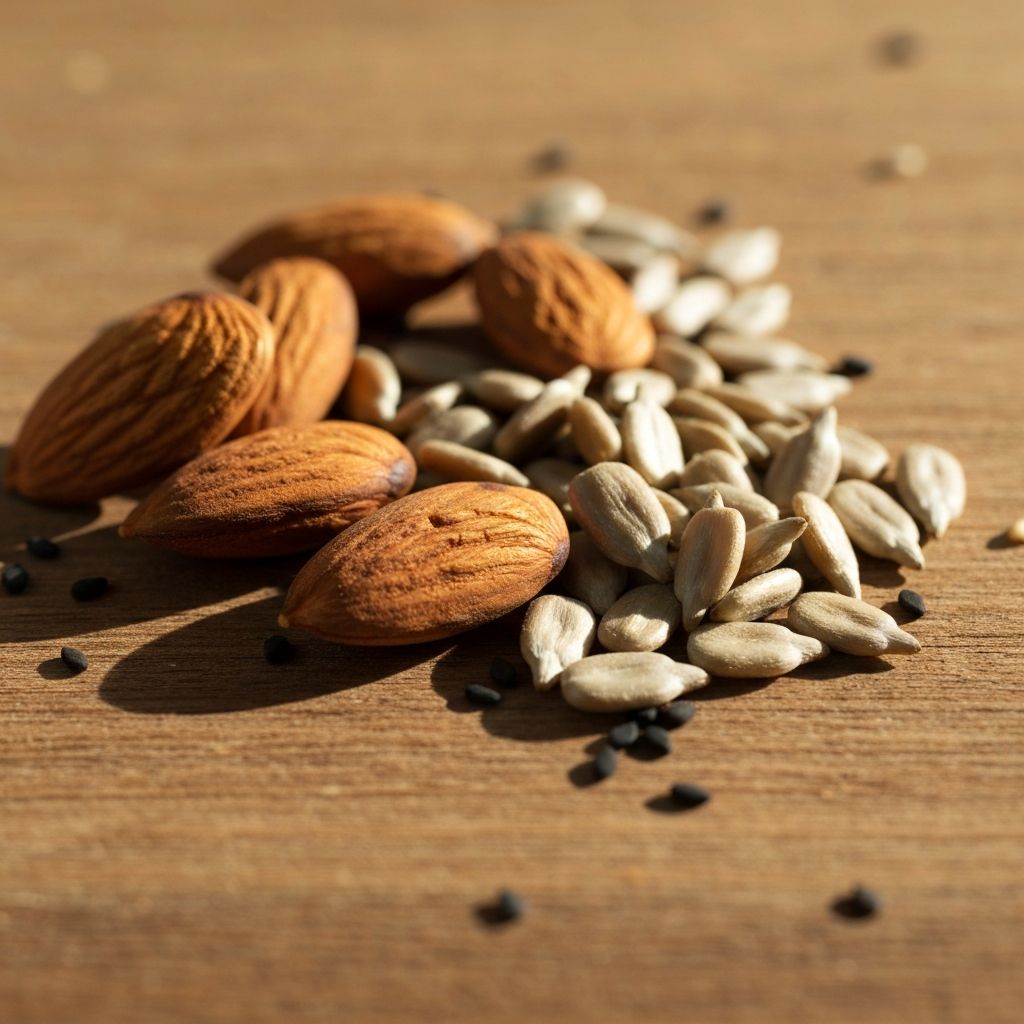
Vitamin E, known as tocopherols, naturally occurs in various plant-based foods. It participates in cell membrane support and contributes to the body's natural antioxidant processes. This gentle element is simply one component of diverse, whole-food nutrition.
Natural Sources
Vitamin E naturally appears in:
- Nuts — almonds, peanuts, hazelnuts
- Seeds — sunflower seeds, sesame seeds
- Oils — sunflower oil, safflower oil, vegetable oils
- Leafy greens — spinach, swiss chard
- Whole grains — wheat, rye
General Role in Body Physiology
In everyday physiology, tocopherols support cell membrane structure and participate in protecting cells during natural metabolic processes. They work as part of the body's natural antioxidant system, supporting gentle, ongoing cellular function without drama or extreme effects.
This is general, neutral scientific context. Individual dietary needs vary, and professional guidance is always appropriate for personal decisions.
Absorption and Everyday Patterns
Tocopherols in whole foods are naturally accompanied by fats and other food components that support gentle absorption through normal digestion. A typical diet rich in nuts, seeds, oils, and leafy vegetables naturally provides tocopherols as part of balanced eating.
In supplemental forms, tocopherols are isolated or combined into concentrated preparations. Both food sources and supplements represent different ways these elements appear in modern eating routines.
Important Context
This page provides purely educational information. It is not medical advice, nutritional guidance, or health direction. Individual dietary considerations, absorption factors, and personal circumstances vary widely. Consult professional resources for personal decisions about nutrition and supplementation.