
Carotenoid Family
General Overview
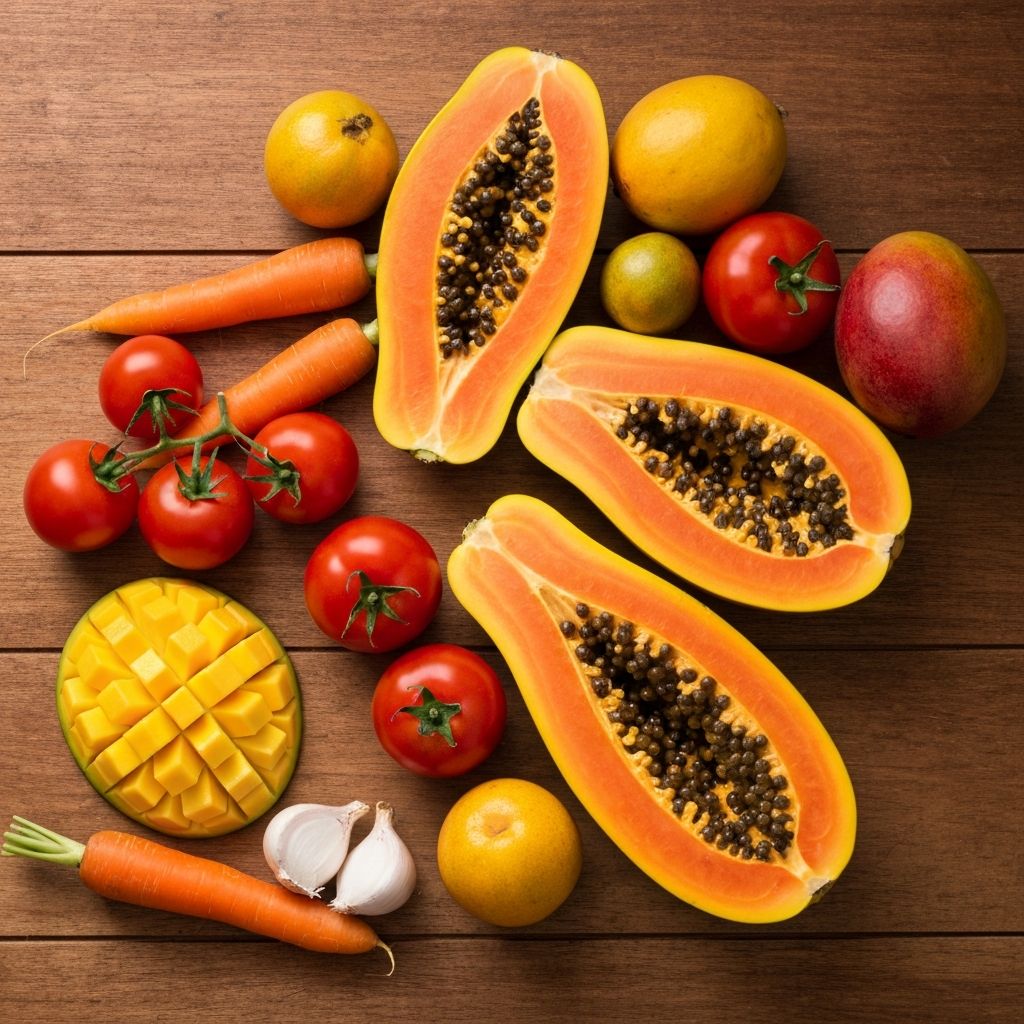
Carotenoids are a family of naturally occurring pigments that give fruits and vegetables their vibrant colors. These plant compounds participate in various roles within the body and are simply one element of diverse, colorful eating patterns.
Natural Sources
Carotenoids naturally occur in:
- Orange vegetables — carrots, sweet potatoes, pumpkin
- Red and pink fruits — tomatoes, watermelon, papaya, guava
- Yellow fruits — mango, yellow bell pepper, corn
- Dark leafy greens — spinach, kale (contain yellow carotenoids masked by chlorophyll)
- Other sources — apricots, cantaloupe, red peppers
General Role in Body Physiology
Carotenoids participate in several roles. Some convert to vitamin A, which supports visual pigments and tissue health. They also contribute to antioxidant processes, protecting cells during natural metabolism. Additionally, they support general immune function as part of the body's everyday protective systems.
These are general physiological roles. The body naturally regulates and uses carotenoids from food sources as part of balanced eating.
Absorption and Dietary Patterns
Carotenoids are fat-soluble, meaning they are best absorbed when consumed with dietary fats. Preparing colorful vegetables with oils or fats naturally supports their absorption. Eating the rainbow — a variety of colorful fruits and vegetables — naturally provides diverse carotenoids.
Whole foods provide carotenoids within their natural context. Supplemental forms offer isolated or combined carotenoids as concentrated preparations, representing different approaches to modern eating routines.
Important Context
This page provides purely educational information. It is not medical advice, nutritional guidance, or health direction. Individual dietary needs and absorption patterns vary. Consult professional resources for personal dietary decisions and supplementation.